
Concave and convex mirrors Manufacturer,Supplier and Exporter in India
.jpg)
Product Code : SCL-PLE-11616
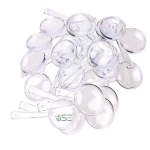
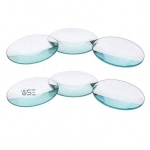
The Concave and Convex Mirrors by Scientifc Equipment are educational optics laboratory instruments designed to demonstrate reflection, image formation, focal point, focal length, magnification, real images, virtual images, and ray optics. They are ideal for school laboratories, college physics labs, STEM classrooms, optics practicals, teacher-led demonstrations, and student experiment activities.
This mirror set helps students understand how curved mirrors reflect light differently. A concave mirror converges parallel rays of light and can form real or virtual images depending on object position, while a convex mirror diverges reflected rays and generally forms a virtual, erect, and diminished image.
Product Description
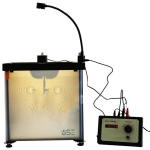
Concave and Convex Mirrors are commonly used in physics classrooms to teach the basic principles of spherical mirrors. Students can use these mirrors with ray boxes, laser line generators, optical benches, candles, screens, or object pins to observe image formation and verify mirror rules.
The Scientifc Equipment Concave and Convex Mirrors set is suitable for experiments related to reflection of light, focal length measurement, image position, object distance, mirror formula, magnification, and practical applications of curved mirrors. It provides a clear and visual method for learning optics through hands-on observation.
Key Features
- Educational mirror set for optics and reflection experiments.
- Includes concave and convex mirror types for comparative study.
- Useful for demonstrating real image and virtual image formation.
- Helps explain focal point, focal length, magnification, and ray diagrams.
- Suitable for use with ray boxes, candles, screens, optical benches, and laser line generators.
- Supports practical learning of spherical mirror principles.
- Ideal for teacher demonstrations and student laboratory practicals.
- Durable educational-grade construction for repeated classroom use.
- Suitable for schools, colleges, physics labs, STEM labs, and science exhibitions.
Product Specifications
|
Product Name |
Concave and Convex Mirrors |
|
Brand |
Scientifc Equipment |
|
Product Type |
Physics Laboratory Optics Mirror Set |
|
Mirror Types |
Concave Mirror and Convex Mirror |
|
Application |
Reflection, Image Formation, Focal Length, Ray Optics, Magnification, and Spherical Mirror Experiments |
|
Working Principle |
Reflection of Light from Curved Mirror Surfaces |
|
Possible Components |
Concave Mirror, Convex Mirror, Holder, Stand, Base, or Mounting Arrangement Depending on Model Design |
|
Compatible Accessories |
Ray Box, Laser Line Generator, Optical Bench, Candle, Screen, Object Pin, Measuring Scale, and White Sheet |
|
Educational Use |
Physics Practical, Optics Demonstration, STEM Learning, Classroom Experiment |
|
Suitable For |
Schools, Colleges, Physics Laboratories, STEM Classrooms, Science Projects, and Science Exhibitions |
|
Learning Topics |
Reflection, Concave Mirror, Convex Mirror, Focal Point, Focal Length, Real Image, Virtual Image, Magnification, and Ray Diagrams |
|
Operation |
Manual Optics Demonstration and Observation-Based Experiment |
How to Use
- Place the concave or convex mirror on a stable laboratory table or optical bench.
- Fix the mirror in a holder or stand if provided with the model.
- For ray tracing, direct a ray box or laser line toward the mirror surface.
- Observe how light rays reflect from the concave and convex mirror surfaces.
- For concave mirror image experiments, place an object such as a candle or pin at different distances from the mirror.
- Use a screen to locate the real image formed by the concave mirror when possible.
- Move the object closer to the concave mirror to observe virtual image formation.
- Use the convex mirror to observe a virtual, erect, and diminished image.
- Measure object distance, image distance, and focal length where required.
- Record observations and draw ray diagrams for each mirror type.
- After use, clean the mirror gently and store it safely to protect the reflective surface.
Safety and Handling Instructions
- Use under the supervision of a teacher or laboratory instructor.
- Handle mirrors carefully to avoid scratches, cracks, or breakage.
- Do not touch the reflective surface with fingers.
- Use a soft, dry cloth for cleaning the mirror surface.
- Do not direct laser light into eyes or reflective surfaces without proper control.
- If using a candle, keep flame away from paper, plastic parts, and flammable materials.
- Store mirrors in a clean, dry, and protected place after use.
Educational Applications
- Demonstration of reflection from curved surfaces.
- Study of image formation by concave mirrors.
- Study of image formation by convex mirrors.
- Measurement of focal length of a concave mirror.
- Understanding real images, virtual images, erect images, and inverted images.
- Learning ray diagrams for spherical mirrors.
- Comparison of converging and diverging mirror behavior.
- Useful for optics practicals, STEM projects, classroom demonstrations, and science exhibitions.
Why Choose Scientifc Equipment Concave and Convex Mirrors?
The Scientifc Equipment Concave and Convex Mirrors set is designed to make optics experiments clear, practical, and easy to demonstrate. It helps teachers explain spherical mirror concepts effectively while students gain hands-on experience with reflection, focal length, image formation, magnification, and ray tracing.
FAQ
- What are Concave and Convex Mirrors used for?
Concave and Convex Mirrors are used to demonstrate reflection, image formation, focal length, magnification, real images, virtual images, and ray optics in physics laboratories.
- Is this mirror set suitable for school laboratories?
Yes, it is suitable for school physics labs, college laboratories, STEM classrooms, optics practicals, science projects, and teacher-led demonstrations.
- What is a concave mirror?
A concave mirror is a curved mirror with an inward reflecting surface. It can converge light rays and form real or virtual images depending on the object position.
- What is a convex mirror?
A convex mirror is a curved mirror with an outward reflecting surface. It diverges reflected light rays and usually forms a virtual, erect, and diminished image.
- Can these mirrors be used to find focal length?
Yes, a concave mirror can be used to find focal length using a distant object, screen, ray box, or optical bench setup. A convex mirror may require suitable optical methods for focal length experiments.
- What accessories may be required with this mirror set?
A ray box, laser line generator, optical bench, screen, candle, object pin, measuring scale, and mirror holder may be used depending on the experiment.
- How should the mirrors be stored after use?
After use, clean the mirrors gently with a soft cloth and store them in a clean, dry, and protected place to prevent scratches and damage.
SEO Keywords
Concave and Convex Mirrors, Scientifc Equipment Concave Convex Mirrors, physics lab mirror set, optics mirror set for school lab, concave mirror experiment, convex mirror experiment, spherical mirror apparatus, focal length mirror experiment, reflection and image formation kit, STEM optics equipment, educational science equipment.
SEO Meta Title
Concave and Convex Mirrors – Scientifc Equipment Optics Mirror Set
SEO Meta Description
Buy Concave and Convex Mirrors by Scientifc Equipment for physics labs, STEM classrooms, and optics demonstrations. Ideal for teaching reflection, focal length, image formation, real images, virtual images, magnification, spherical mirrors, and ray diagrams.
Google E-E-A-T Focused Content
This product content is prepared to support teachers, laboratory suppliers, educational institutions, STEM coordinators, students, physics learners, and science buyers with clear product information, practical specifications, usage guidance, safety instructions, and helpful FAQs. The content focuses on accurate optics concepts, real classroom applications, safe mirror handling, and trustworthy educational value to improve product clarity, search visibility, and user confidence.

.jpg)

.jpg)
