
Colour Mixer Demonstrator Manufacturer,Supplier and Exporter in India
.jpg)
Product Code : SCL-PLE-11851
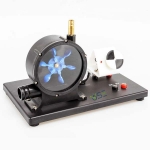
The Colour Mixer Demonstrator by Scientifc Equipment is an educational optics and light demonstration apparatus designed to teach colour mixing, primary colours of light, additive colour theory, subtractive colour comparison, visual perception, and light blending. It is suitable for school science laboratories, physics classrooms, STEM labs, art-science activities, teacher demonstrations, and supervised student experiments.
This demonstrator helps students understand how different colours combine to form new colours. Depending on the product configuration, it can be used to demonstrate red, green, and blue light mixing, secondary colour formation, white light creation, colour overlap, shadow effects, and the difference between coloured light and pigment mixing.
Product Description
Colour mixing is an important concept in optics, vision science, display technology, printing, photography, and art education. The Colour Mixer Demonstrator provides a practical classroom method for showing how colours interact when light beams, filters, discs, or coloured sources are combined under controlled conditions.
The Scientifc Equipment Colour Mixer Demonstrator may include coloured light sources, LED modules, colour filters, rotating colour discs, sliders, projection screen, control switches, holders, power leads, or demonstration accessories depending on product configuration. It is designed for supervised educational and laboratory demonstration use only.
Key Features
- Educational apparatus for demonstrating colour mixing and colour theory.
- Useful for teaching primary and secondary colours of light.
- Supports additive colour mixing demonstrations using red, green, and blue light depending on model design.
- Helps explain colour overlap, coloured shadows, reflected light, and visual perception.
- Suitable for physics, optics, STEM, art-science, and classroom activities.
- Can be used for teacher demonstrations and supervised student practicals.
- Helps students compare light mixing with pigment or filter mixing concepts.
- Encourages observation, prediction, comparison, recording, and scientific discussion.
- Designed for supervised educational use only.
Product Specifications
|
Product Name |
Colour Mixer Demonstrator |
|
Brand |
Scientifc Equipment |
|
Product Type |
Educational Colour Mixing and Optics Demonstration Apparatus |
|
Application |
Colour Mixing Demonstration, Additive Colour Theory, Light and Optics Lesson, STEM Activity, Art-Science Learning, Visual Perception Study, and Classroom Teaching |
|
Working Principle |
Different Coloured Light Sources or Filters Are Combined to Show How Colours Mix, Overlap, and Form New Colours Under Suitable Viewing Conditions |
|
Possible Components |
Coloured Light Sources, LED Modules, Red Green Blue Filters, Colour Disc, Projection Screen, Control Switches, Holders, Base, Connecting Leads, and Demonstration Accessories Depending on Product Configuration |
|
Possible Material |
Plastic, Acrylic, Metal Frame, LED Components, Colour Filters, Printed Colour Disc, Insulated Wiring, Switches, and Educational-Grade Classroom Materials Depending on Model Design |
|
Colour Coverage |
Primary and Secondary Colour Demonstrations Such as Red, Green, Blue, Cyan, Magenta, Yellow, and White Light Depending on Product Configuration |
|
Power Requirement |
Battery Operated, Low-Voltage DC Power Supply, or Model-Specific Power Adapter Depending on Product Configuration |
|
Compatible Accessories |
White Screen, White Paper, Darkened Room, Light Box, Projection Surface, Activity Sheet, Batteries, Low-Voltage Power Supply, and Optics Teaching Accessories |
|
Educational Use |
Physics Lesson, Optics Practical, Colour Theory Demonstration, STEM Project, Art-Science Activity, and Student Observation Work |
|
Suitable For |
Schools, Colleges, Science Rooms, Physics Laboratories, STEM Labs, Art Rooms, Teacher Training Centers, and Educational Institutions |
|
Learning Topics |
Colour Mixing, Primary Colours, Secondary Colours, Additive Colour Theory, RGB Light, Coloured Shadows, Filters, Reflection, Absorption, and Visual Perception |
|
Operation |
Manual or Electrical Colour Selection, Light Projection, Colour Overlap Observation, Disc Rotation or Filter Placement, Result Comparison, and Supervised Classroom Use |
|
Important Note |
For Educational and Classroom Demonstration Use Only; Design, Colour Sources, Brightness, Power Source, Size, Accessories, and Construction Depend on Product Configuration |
How to Use
- Place the Colour Mixer Demonstrator on a stable, clean, dry, and level classroom or laboratory bench.
- Inspect the light sources, filters, switches, discs, screen, wires, and accessories before use.
- Set up a white screen, white paper, or suitable projection surface in front of the demonstrator.
- If the model is electrical, connect it only to the recommended battery or low-voltage power source.
- Switch on or select one colour at a time and observe the colour produced on the screen.
- Combine two colours and observe the new colour formed by overlap or mixing.
- Combine red and green, green and blue, and red and blue to observe secondary colours where the setup allows.
- Combine all primary colours to observe white or near-white light depending on brightness and alignment.
- If the model uses a rotating colour disc, rotate the disc and observe the blended visual effect.
- Record colour combinations and results in an activity sheet or notebook.
- Switch off the apparatus after use, disconnect the power source if applicable, and store all accessories safely.
Safety and Handling Instructions
- Use only under teacher, instructor, or trained adult supervision.
- Do not shine bright light sources directly into eyes, face, mirrors, or reflective surfaces.
- Use only the recommended low-voltage power source; do not connect directly to mains electricity unless the model is specifically rated for it.
- Switch off the apparatus before changing filters, discs, wires, or accessories.
- Do not touch exposed terminals, damaged wires, or internal electrical components.
- Keep fingers, hair, loose clothing, and small objects away from rotating parts if the model includes a spinning disc.
- Keep the apparatus away from water, chemicals, flames, heat, dust, and damp surfaces.
- Do not bend, scratch, cut, burn, or damage colour filters or transparent parts.
- Do not use cracked lenses, damaged switches, unstable parts, or loose electrical connections.
- Store in a clean, dry, and protective place after use.
Educational Applications
- Demonstrating colour mixing in optics lessons.
- Teaching primary and secondary colours of light.
- Explaining additive colour theory using red, green, and blue light.
- Comparing coloured light mixing with pigment and filter mixing.
- Showing coloured shadows, colour overlap, and visual perception effects.
- Supporting STEM projects, art-science activities, and classroom demonstrations.
- Introducing colour principles used in screens, displays, photography, and printing.
- Encouraging observation, prediction, recording, comparison, and scientific reasoning.
Why Choose Scientifc Equipment Colour Mixer Demonstrator?
The Scientifc Equipment Colour Mixer Demonstrator provides a clear, practical, and engaging way to teach colour theory and light mixing. It helps students observe colour combinations directly, making optics, visual perception, RGB light, and colour formation easier to understand through supervised classroom demonstration.
FAQ
- What is a Colour Mixer Demonstrator used for?
It is used to demonstrate colour mixing, primary and secondary colours, additive colour theory, coloured shadows, and light overlap in optics lessons.
- Is this product suitable for school science laboratories?
Yes, it is suitable for school science labs, physics classrooms, STEM labs, art rooms, teacher demonstrations, and supervised student experiments.
- Which colours can be demonstrated?
Common demonstrations include red, green, blue, cyan, magenta, yellow, and white light. Exact colour coverage depends on product configuration.
- What is additive colour mixing?
Additive colour mixing occurs when coloured light sources combine to produce new colours. Red, green, and blue light can combine to create white light under suitable conditions.
- Does the demonstrator require electricity?
Some models may use batteries or a low-voltage power supply, while other models may use manual filters or colour discs. Power requirements depend on product configuration.
- Can students operate it independently?
Students should use the demonstrator under teacher or adult supervision, especially when using electrical parts, light sources, or rotating discs.
- Can it be used for art and design lessons?
Yes, it is useful for art-science activities because it helps students understand colour relationships, visual perception, and the difference between light mixing and pigment mixing.
- How should the Colour Mixer Demonstrator be stored?
Store the demonstrator and accessories in a clean, dry, and protective place away from heat, moisture, dust, chemicals, direct sunlight, and rough handling.
SEO Keywords
Colour Mixer Demonstrator, Scientifc Equipment Colour Mixer, colour mixing apparatus, additive colour mixing demonstrator, RGB light colour mixer, school optics colour demonstration, STEM colour theory kit, physics lab colour mixer, classroom light mixing apparatus, colour shadow experiment, primary colour teaching aid, educational colour mixer demonstrator.
SEO Meta Title
Colour Mixer Demonstrator – Scientifc Equipment
SEO Meta Description
Buy Colour Mixer Demonstrator by Scientifc Equipment for school science labs, optics lessons, additive colour mixing, RGB light demonstrations, coloured shadow activities, STEM learning, and art-science classroom experiments.
Google E-E-A-T Focused Content
This product content is prepared to support teachers, school buyers, laboratory suppliers, physics educators, art instructors, STEM coordinators, science teachers, lab technicians, students, and educational institutions with clear product information, practical specifications, usage guidance, safety instructions, and helpful FAQs. The content focuses on accurate educational optics applications, supervised colour mixing demonstrations, safe light and low-voltage handling, RGB colour learning, visual perception observation, and trustworthy product guidance while clearly stating that the product is for supervised educational and classroom demonstration use only.
.jpg)
.jpg)
 (1).png)
.jpg)
.jpg)
.jpg)
.jpg)